
Lake County Court Records After a Jail Arrest
After someone is arrested and booked in Lake County, the case does not stay with the Sheriff alone. The State Attorney for the Fifth Judicial Circuit reviews the arrest and files the charges, and the Clerk of Court opens the case. That filing is what creates the court records you can search after an arrest. The Clerk's Criminal Division handles felony cases in the Circuit Court and misdemeanor cases in the County Court for Lake County.
It helps to keep the two sides apart. The booking and arrest side lives on the jail roster, with arrest charges, bond, and booking photos covered on the jail inmate records page and the jail mugshots page. The court record is the formal case: the charges the prosecutor actually filed, the docket, the hearings, and the disposition. The same arrest can show one set of charges at the jail and a changed set in the court records.
From Arrest to a Court Record
The pathway is the same for most cases. Arrest, then booking, then an early hearing, then the prosecutor's filing decision, then an open court case. In Lake County the jail and the courthouse sit across from each other on West Main Street, which is a useful reminder that the booking record and the court record are two separate systems on the same block.
- The arresting agency books the person into the county detention system.
- The jail roster may show booking charges, bond, a court date, and a case number.
- The person is usually seen by a duty judge within about 24 hours.
- The State Attorney reviews the case and files the formal charges.
- The Clerk opens or updates the case in the ShowCase court records system.
How to Find Lake County Court Records After an Arrest
The Clerk's ShowCase portal is the public search for court records after an arrest. Public search is free after you accept the access notice, and registered users get broader access. Search by a defendant's name or by case number, then open the case to read the charges and their status.
- Open the Lake County ShowCase court records search.
- Search by last and first name, or enter a case number.
- Open the case and read the charge list on the Charges tab.
- Check each charge's statute, level, and current status.
You can see the case-search and citation-search controls on the portal before you run anything. The Clerk's online court records page explains the access rules first.
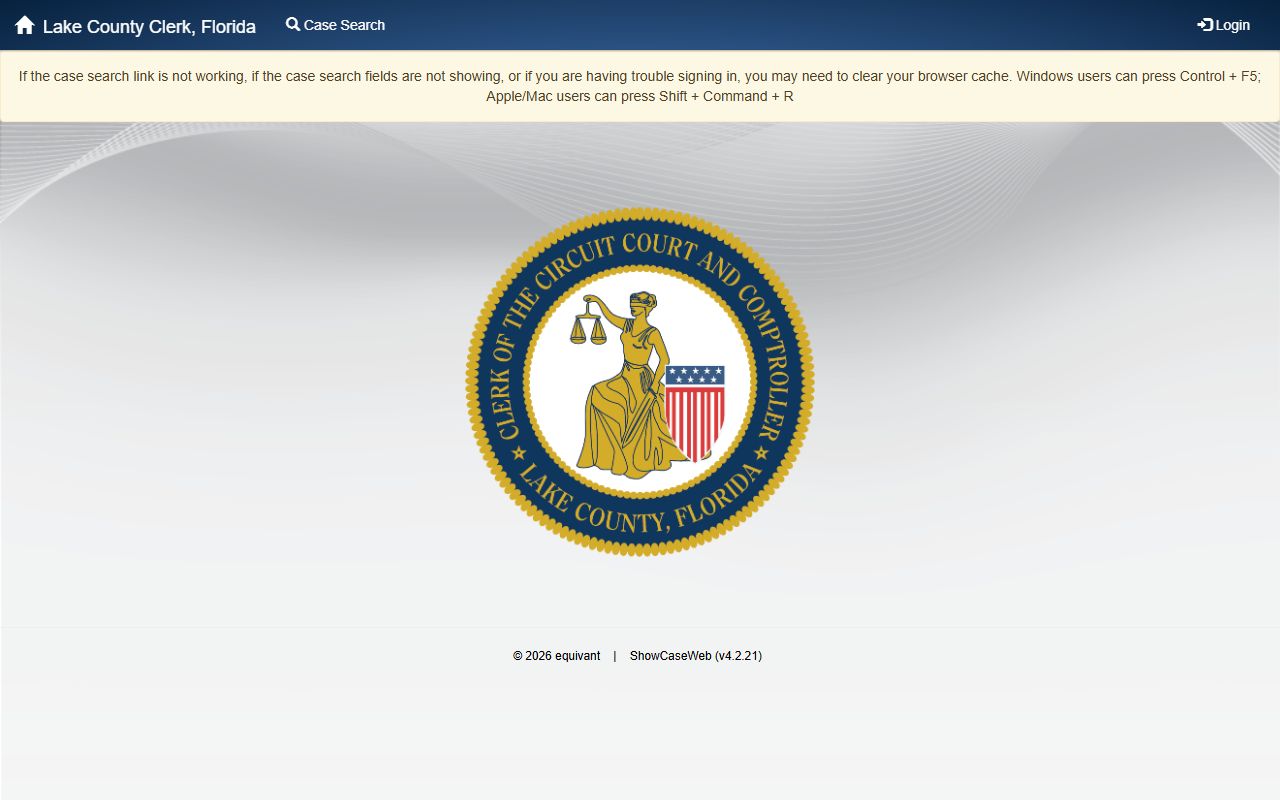
That portal accepts far more than a name. The most useful fields for finding a case after an arrest are below.
| Field Label | Type | Notes |
|---|---|---|
| Last Name | Text | Wildcard % supported; company names go here. |
| First Name | Text | Optional; narrows the result list. |
| Date of Birth | Date | MM/DD/YYYY format. |
| Case Number | Text | Several formats accepted, such as 2016 MM 1234. |
| Booking # | Text | Ties a court case back to the jail booking. |
| Search Type | Radio | Exact, SoundEx, or Starts With. |
The Clerk's guide suggests Starts With plus the % wildcard when spelling is uncertain, such as SMI% to catch Smith or Smithfield.
How Charges Get Filed After an Arrest: Complaint, Information, and Indictment
The arrest does not set the final charges. After booking, the charge record really begins when the prosecutor files a charging document. There are three main types, and which one is used depends on the level of the offense.
| Complaint | Information | Indictment | |
|---|---|---|---|
| Filed By | Officer / Prosecutor | State Attorney | Grand Jury |
| Common For | Misdemeanors | Many felonies | Serious felonies |
| Starts | The case | The case | The case |
In Florida most felonies move forward on an information filed by the State Attorney, while the most serious offenses, such as a capital charge, can go before a grand jury for an indictment. The court record shows which document opened the case.
Charge Status and What It Means
Charges change as a case moves. A charge can be amended, reduced, added, or dropped, and the booking charges on the jail roster can differ from the charges the prosecutor finally files. The Charges tab in ShowCase shows the offense, level, plea, and disposition, which is where the current status lives. Common status terms are defined below.
| Status | What It Means |
|---|---|
| Pending | The charge is filed and the case is still open, with no final outcome yet. |
| Amended / Reduced | The prosecutor changed the charge, often to a lower level. |
| Dismissed | The charge was dropped and will not move forward. |
| Nolle Prosequi | The prosecutor's formal decision not to pursue the charge. |
Note: Online court records vary by case type and year, and cases before 2003 generally have no document images, so some files are request-only.
What a Lake County Court Case File Shows
Once a case is open, the court record holds far more than the booking did. The Clerk's ShowCase case file is organized into tabs, and each one answers a different question about the case after the arrest. Reading them together is how you tell a current charge from a final outcome.
- Charges shows the offense, statute, level, plea, and disposition with dates.
- Court Events lists past and upcoming hearing dates and types.
- Dockets is the running list of filings and actions in the case.
- Sentences shows confinement, term, credit time, and conditions.
- Arrests & Bonds carries the booking number and bond detail, the bridge back to the jail.
The Arrests & Bonds tab is the link between the two systems, since it repeats the booking and incident numbers that tie a court case to the Sheriff's jail record. The Sentences tab is where a reader learns the result that a booking photo and arrest charge could never show on their own.
The State Attorney's Role
The Office of the State Attorney for the Fifth Judicial Circuit is the prosecutor, not the keeper of the jail roster. It serves Citrus, Hernando, Lake, Marion, and Sumter Counties, and the current State Attorney is Bill Gladson. The Sheriff's Central Records forwards felony and misdemeanor arrests to this office, which decides what to file and then prosecutes the case in the Circuit and County Courts.
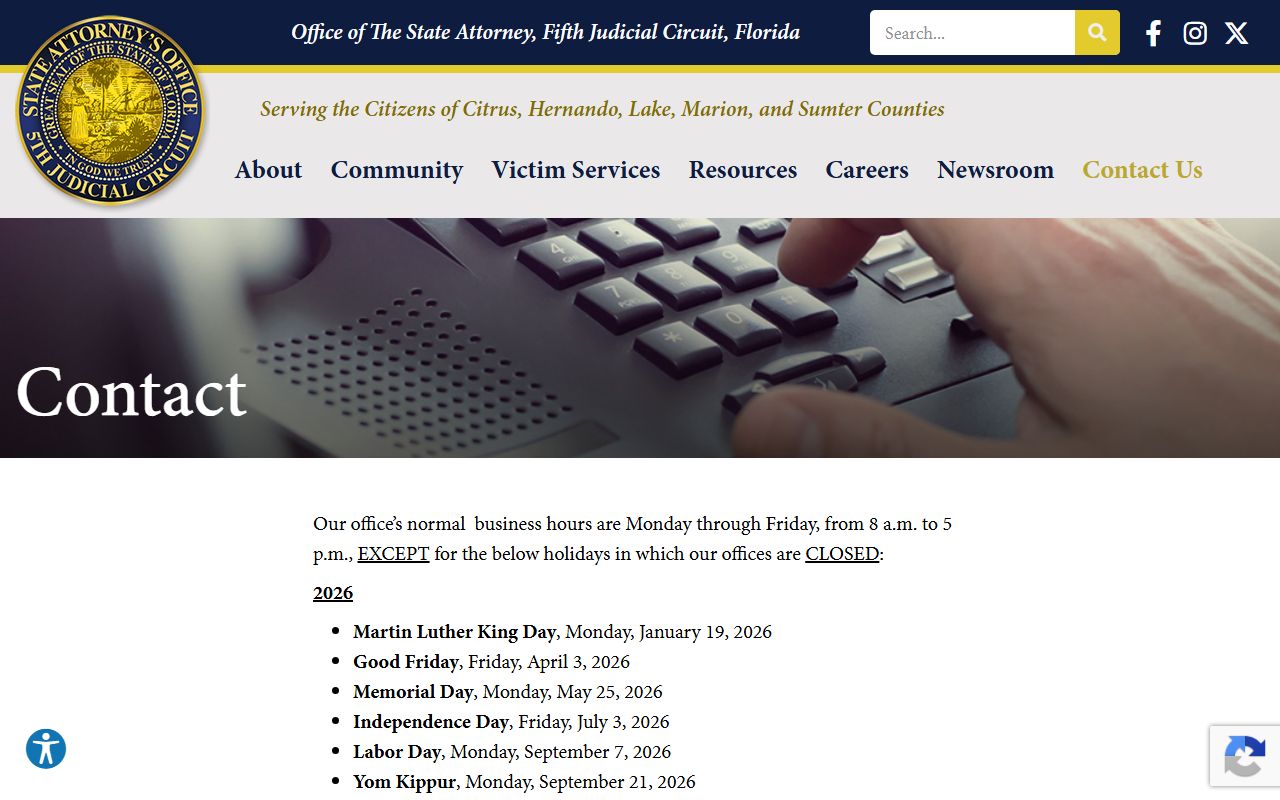
The Lake County office sits at the Judicial Center on West Main Street. You can see its contact details and news on the official site. The State Attorney contact page lists the Lake County office address, phone, and hours.
Records held by the prosecutor's office, rather than the court file, are requested separately through the State Attorney's public-records process.
Bond and Release After an Arrest
Bond is usually addressed at first appearance, where the judge reviews the charges and any indigency or Public Defender request. Most felony offenses are bondable under the bail schedule, and some misdemeanor defendants are released on recognizance or a notice to appear. A hold or detainer from another agency can keep a person in custody even when local bond is posted.
| Bond Type | How It Works |
|---|---|
| Cash Bond | The full amount is paid at the Detention Center lobby, with the payee set by the charge. |
| Surety Bond | A licensed bonding agency posts the bond for a fee or arrangement. |
| PR / Own Recognizance | Release on a promise to appear, used for some lower-level cases. |
| No-Bond Hold | No release amount is set, or another hold blocks release. |
Local checks or money orders are made out to the Clerk of Courts, while out-of-county charges name the Lake County Sheriff. The Sheriff says to call and confirm the amount and payee at 352-742-4024 before bringing funds, and warns that no employee will ever phone asking for bond money.
Warrants That Lead to an Arrest
An outstanding warrant can turn into a booking, and a missed court date can produce a capias. The Sheriff's Warrants Department enters warrants into the state and national systems, but it will not give warrant information over the phone. All warrant questions must be handled in person at the Sheriff's Office, or through a local agency if a person cannot travel to Lake County. The Clerk cannot reveal outstanding warrant information and refers people to the Sheriff. There is no public online warrant search for Lake County in the official sources.
Charges vs. Convictions
Being arrested and charged is not the same as being convicted. A charge is an accusation that the case is still testing. A conviction is the outcome after a plea or a verdict.
| Charge | Conviction | |
|---|---|---|
| Stage | Accusation | Verdict or plea |
| Burden of Proof | Probable cause | Beyond a reasonable doubt |
| Public Record | Yes | Yes |
The Sheriff's roster disclaimer makes the same point: an arrest does not indicate guilt, and the roster should not be used for legal action. The court file shows whether a charge ended in a conviction, a dismissal, or another disposition.
Sealed vs. Expunged Records After an Arrest
Florida law lets some people seal or expunge an eligible record after a qualifying outcome. Sealing makes a record confidential, while expunction goes further toward removal. Both are court processes with eligibility rules, set out in Florida Statutes § 943.059 for sealing and § 943.0585 for expunction.
| Sealed | Expunged | |
|---|---|---|
| Visibility | Hidden from public view | Treated as removed |
| Law Enforcement | Limited access | Very limited access |
| Process | Court order under § 943.059 | Court order under § 943.0585 |
The Clerk says a sealed or expunged record will not be disclosed through its search. Eligibility is specific, so verify it through the court or counsel rather than assuming a dismissal clears a record on its own.
Restricted Court Records After an Arrest in Lake County
Some court records after an arrest are limited or withheld. Juvenile records are confidential and released only to the person searched or a legal guardian with ID. Sealed and expunged charges are removed from public access. Many document images are held back for confidentiality review and become available only on request, after redaction. Access also depends on the user's role, the case type, and the document, under Florida Supreme Court rules rather than the open-records law alone.